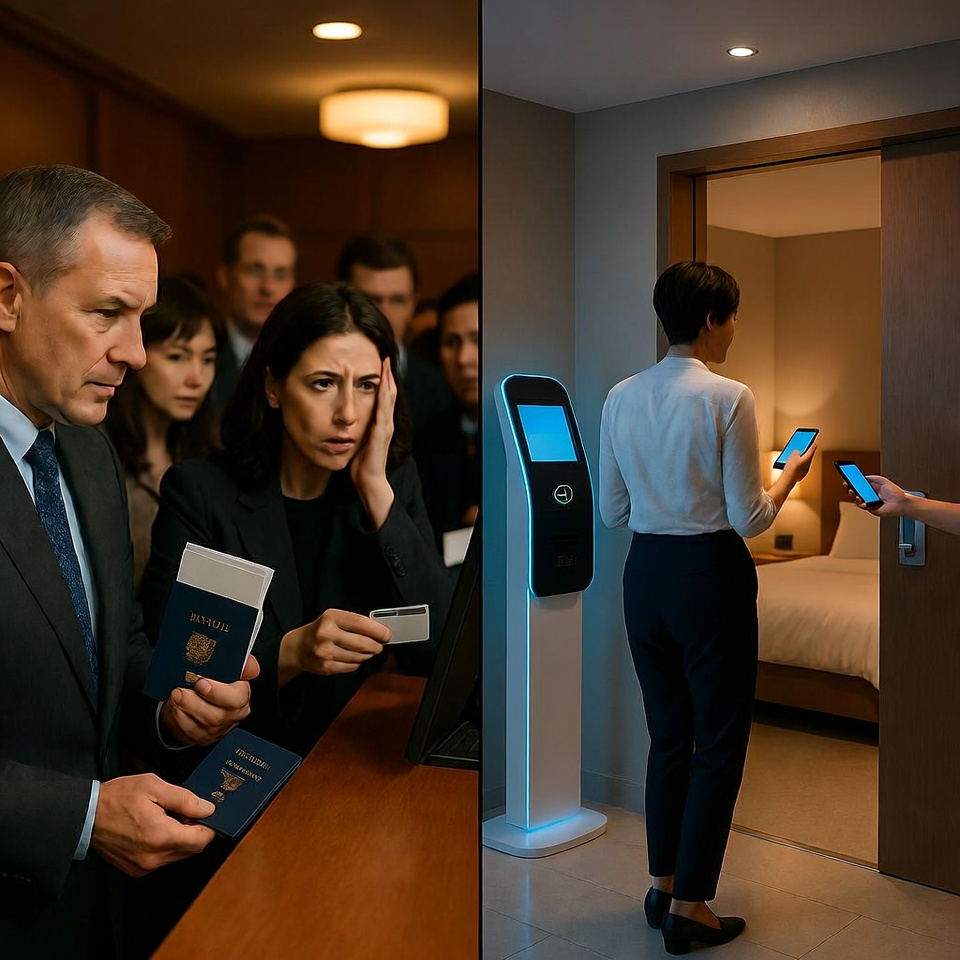
Think about the last time you checked into a hotel.
Did it feel smooth, or did you end up digging through your bag for a passport you’d already typed into an app?
That gap between “we said it was online” and “please queue here with your documents” is where guest frustration lives. The new trend “online check-in” summer release is trying to kill that gap.
Why This Matters
Guests don’t care about systems.
They care about getting from lobby to bed with zero friction.
Hotels, on the other hand, need safety checks, legal compliance, better data, and more revenue. The magic happens when technology quietly does all of that in the background without putting more steps in front of the guest.
online check-in is built around one idea:
Make the guest journey feel effortless, while the heavy lifting happens behind the scenes.
Online check‑in replaces the front desk ritual instead of duplicating it. Kiosks become a true self‑service option instead of a prettier queue. And all the data that flows through the stay turns into practical insights, not cluttered spreadsheets.
How It Works – online check-in
The guest journey starts before arrival:
- Online check‑in with ID and selfie Guests upload passport data and a selfie from their phone. The system extracts what’s needed, shares it with authorities where required, and deletes it on schedule. No surprise “passport, please” at the desk.
- Apple Wallet keys instead of plastic cards After check‑in, the guest taps one button and adds the room key to their Apple Wallet. No app download. No login loops. It works like a transit pass, even when the phone battery is low.
- Kiosk as a full check‑in and checkout station The same verification flow runs on kiosks. Guests can choose a wallet key or plastic card. At checkout, they can update billing details, split the bill, and buy a candle or other merchandise on the way out.
Meanwhile, the system keeps learning:
- It tracks how often a guest returns, how much they spend, and what they tend to buy.
- AI “smart tips” condense everything into one short insight the team can act on.
- Dynamic email rules send a focused, “here’s how to get to your room fast” message to business travelers and a more inspirational version to leisure guests.
The result: staff spend less time on admin and more time making stays memorable.
Quick Example of online check-in
A frequent guest checks into a chain hotel in Prague.
Before arrival, they complete online check‑in, scan their passport, take a selfie, and add the key to Apple Wallet. When they land, they walk straight from taxi to room. No queue. No paperwork. No app hunt.
At the same time, the system already knows this guest often requests an ironing board.
Housekeeping gets a quiet nudge. The ironing board is waiting in the room when the guest opens the door.
For the guest, it feels like magic.
For the hotel, it is data, automation, and a well‑designed flow.
The Takeaway
“Smooth operations” in hospitality are not about flashy gadgets.
They are about removing every tiny moment of friction from the guest journey while systems handle ID checks, payments, preferences, and communication in the background.
The hotels that win will be the ones where technology disappears, and all the guest remembers is how effortless it felt to arrive, stay, and leave.